Affiliate Banner - horizontal (banner-top)
Replace this placeholder with your actual ad code
Edit in: config/blog/blog-config.json
WooCommerce vs Shopify 2025: The Complete Guide to Choosing Your eCommerce Platform
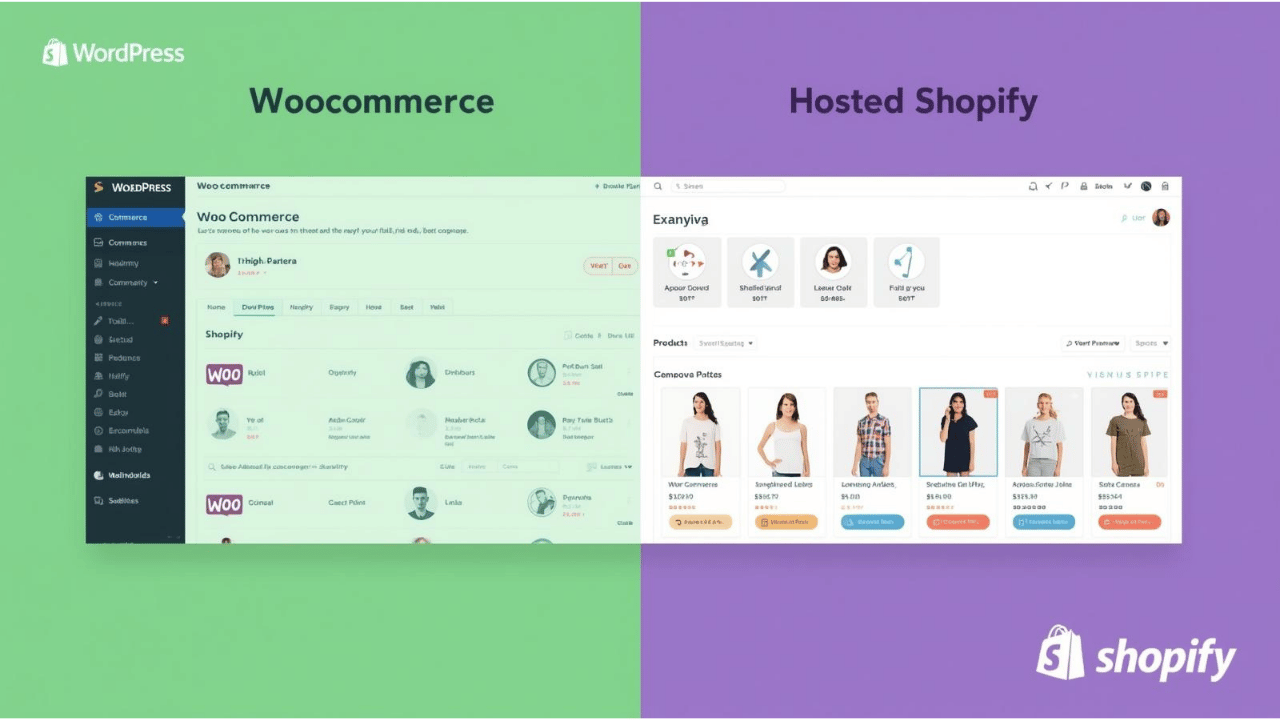
Building an online store in 2025? You've narrowed it down to two powerhouses: Shopify (the fully hosted solution powering 9+ million stores) and WooCommerce (the WordPress plugin running 6.6 million sites).
But which platform truly fits your business model, technical skills, and growth ambitions?
Here's the critical decision: Shopify handles everything for you—hosting, security, updates, and support—while WooCommerce gives you complete control over every aspect of your store, but requires you to manage hosting, security, and maintenance yourself.
This isn't just about features and pricing. It's about the fundamental difference between convenience and control, simplicity and flexibility, managed service and DIY customization.
In this comprehensive 2025 comparison, we'll examine:
- Detailed pricing (including hidden costs for both)
- Hosted vs self-hosted trade-offs
- Real-world performance and capabilities
- When each platform makes sense
- Alternative platforms you should consider (BigCommerce, Wix, Square Online)
- Special deals (Shopify at $1/month for 90 days!)
Let's dive in and find the perfect platform for your eCommerce business.
Platform Fundamentals: Hosted vs Self-Hosted
Before comparing features, you must understand the philosophical difference between these platforms:
Shopify: The Fully Hosted Solution
What "Fully Hosted" Means:
- Shopify hosts your store on their servers
- They handle security, SSL certificates, and PCI compliance
- Automatic software updates and maintenance
- Built-in CDN for global performance
- 99.99% uptime guarantee backed by infrastructure
- 24/7 customer support for technical issues
The Shopify Philosophy: "Focus on selling products, not managing servers."
Real-World Impact: Your store stays online during Black Friday traffic spikes because Shopify processed $4.2 million per minute in 2024 without downtime.
WooCommerce: The Self-Hosted Plugin
What "Self-Hosted" Means:
- You purchase domain and hosting separately
- You install WordPress, then add WooCommerce plugin
- You're responsible for security, backups, and updates
- You choose hosting provider (affects speed and reliability)
- You handle technical troubleshooting
- Support comes from community forums
The WooCommerce Philosophy: "Your store, your rules, your infrastructure."
Real-World Impact: You control everything, but you're responsible for everything. Server crashes at 2 AM? You fix it or pay a developer.
The Core Trade-Off
Shopify's Approach:
✅ "It just works" simplicity
✅ Professional support when issues arise
❌ Less control over infrastructure
❌ Dependent on Shopify's decisions
WooCommerce's Approach:
✅ Complete control and ownership
✅ Flexibility to customize anything
❌ Technical responsibility falls on you
❌ DIY problem-solving required
This single difference influences every aspect of your eCommerce journey.
Complete Pricing Comparison (2025)
Shopify Pricing Plans
| Plan | Monthly | Annual (25% OFF) | Transaction Fees | Best For |
|---|---|---|---|---|
| Starter | $5/month | N/A | 5% + payment fees | Link-in-bio selling, social commerce |
| Basic | $39/month | $29/month | 2% (0% with Shopify Payments) | New stores, single-person operations |
| Shopify (formerly "Grow") | $105/month | $79/month | 1% (0% with Shopify Payments) | Growing businesses, 5-15 products |
| Advanced | $399/month | $299/month | 0.5% (0% with Shopify Payments) | High-volume stores needing advanced reports |
| Shopify Plus | From $2,300/month | Custom | 0.15% | Enterprise businesses, $800K+ annual revenue |
🔥 Special Offer (2025):
90 days at $1/month for your first subscription!
- Try any plan (Starter through Advanced)
- Full feature access
- No long-term commitment
- Switch plans anytime
Additional Shopify Costs:
- Domain: $14-20/year (optional—use existing domain)
- Themes: 9 free themes; premium themes $140-$350 one-time
- Apps: Free to $300+/month (depends on needs)
- Transaction Fees: 0.5-2% if not using Shopify Payments
- Payment Processing: 2.9% + 30¢ (online); 2.7% + 0¢ (in-person)
Annual Cost Examples:
Small Store (Basic Plan):
- Plan: $29/month × 12 = $348/year
- Theme: $180 (one-time)
- Apps: $50/month × 12 = $600/year
- Total Year 1: ~$1,128
Growing Store (Shopify Plan):
- Plan: $79/month × 12 = $948/year
- Theme: $250 (one-time)
- Apps: $150/month × 12 = $1,800/year
- Total Year 1: ~$2,998
WooCommerce Pricing Breakdown
The Plugin: FREE ✓
But "free" is misleading. Here's what you actually pay:
| Component | Cost | Required? |
|---|---|---|
| WooCommerce Plugin | FREE | Yes |
| Domain Name | $12-20/year | Yes |
| Hosting | $5-300+/month | Yes |
| SSL Certificate | $0-100/year (often free with hosting) | Yes |
| Theme | $0-200 one-time | Yes |
| Extensions/Plugins | $0-500+/year | Depends on needs |
| Security | $50-300/year | Recommended |
| Backups | $50-200/year | Recommended |
| Developer Help | $50-150/hour | Occasional |
Annual Cost Examples:
Budget WooCommerce Store:
- Hosting (Shared): $60/year
- Domain: $15/year
- Free theme: $0
- Essential plugins: $100/year
- Total Year 1: ~$175/year
Professional WooCommerce Store:
- Hosting (Managed WordPress): $300/year
- Domain: $15/year
- Premium theme: $89 one-time
- Premium plugins: $400/year
- Security/backups: $150/year
- Developer help (occasional): $300/year
- Total Year 1: ~$1,254/year
Enterprise WooCommerce Store:
- Hosting (WooCommerce-optimized): $3,600/year
- Domain: $15/year
- Custom theme development: $3,000 one-time
- Premium plugins: $1,000/year
- Security/maintenance: $1,200/year
- Developer retainer: $6,000/year
- Total Year 1: ~$14,815/year
Direct Cost Comparison
| Store Size | WooCommerce | Shopify | Winner |
|---|---|---|---|
| Startup (Year 1) | $175-500 | $348-600 (with $1 promo: $90-350) | WooCommerce (barely) |
| Small Business (Year 1) | $800-1,500 | $1,128-1,500 | Tie |
| Growing Business (Year 1) | $1,500-3,000 | $2,998-4,000 | WooCommerce |
| Enterprise | $10,000-30,000+ | $27,600+ (Plus plan) | WooCommerce |
The Pricing Reality:
- WooCommerce is cheaper for businesses with technical skills or dev budgets
- Shopify is predictable with transparent monthly costs
- WooCommerce costs scale with traffic and customization needs
- Shopify costs scale with revenue (transaction fees) and app dependencies
Hidden Cost Factor: Your time. Managing WooCommerce requires 5-15 hours/month for updates, troubleshooting, and optimization. At $50/hour value, that's $3,000-9,000/year in opportunity cost.
Ready to test Shopify risk-free? Get 90 days at just $1/month with full access to all features. Start Your Shopify Trial →
Feature-by-Feature Comparison
Ease of Use & Setup Time
Shopify: ★★★★★ (Beginner-Friendly)
Setup Process:
- Sign up with email
- Answer quick questionnaire about your business
- Choose a theme (9 free options)
- Add products via intuitive interface
- Connect payment processor
- Launch store
Time to Launch: 1-3 hours for basic store
Technical Skills Required: None—guided wizards walk you through everything
Ongoing Maintenance: Minimal—Shopify handles updates, security, backups
WooCommerce: ★★★☆☆ (Requires Learning Curve)
Setup Process:
- Purchase domain and hosting
- Install WordPress
- Install and activate WooCommerce plugin
- Choose and install theme
- Configure settings (payments, shipping, taxes, etc.)
- Install additional plugins for missing functionality
- Configure security and backups
- Optimize performance and SEO
- Add products
- Launch store
Time to Launch: 1-3 days for basic store (if experienced); 1-2 weeks for beginners
Technical Skills Required: Basic understanding of WordPress, hosting, FTP, plugin management
Ongoing Maintenance: 2-5 hours/month for updates, backups, security monitoring, troubleshooting
The Reality Check:
Millions of beginners successfully use WooCommerce, but Shopify is objectively simpler. If you're choosing WooCommerce, expect a learning curve—but you'll gain valuable technical knowledge.
Verdict: If you need a store launched THIS WEEK with zero technical headaches, Shopify wins decisively.
Design & Themes
Shopify Themes: ★★★★★ (Professional Quality)
What's Available:
- 9 professionally designed free themes
- 100+ premium themes ($140-$350 one-time)
- Mobile-responsive by default
- Built-in theme customizer (no coding required)
- Conversion-optimized layouts
- Regular updates from theme developers
Customization:
- Visual theme editor for colors, fonts, layout
- Liquid templating language for advanced customization
- App integrations work seamlessly
- Consistent quality and performance
Notable Themes:
- Dawn (Free): Fast, minimalist, flexible
- Debut (Free): Classic ecommerce design
- Prestige (Paid $350): High-end luxury aesthetic
- Symmetry (Paid $320): Multi-language, perfect for fashion
WooCommerce Themes: ★★★★☆ (Endless Variety)
What's Available:
- Thousands of free themes (WordPress.org, theme directories)
- 1,000+ premium themes on ThemeForest ($30-200)
- Premium options from StudioPress, Elegant Themes, Astra
- Complete design freedom
- Variable quality (free themes often outdated)
Customization:
- Page builders (Elementor, Divi, Beaver Builder)
- Complete CSS/PHP access
- Child themes for safe customization
- Unlimited possibilities for developers
Notable Themes:
- Storefront (Free): Official WooCommerce theme
- Astra (Free+Pro): Fast, flexible, widely used
- Flatsome ($59): Best-selling WooCommerce theme
- Shopkeeper ($69): Elegant multi-purpose design
Key Differences:
Shopify Strengths:
✅ Consistent professional quality
✅ Guaranteed mobile optimization
✅ Built-in conversion best practices
✅ Less overwhelming choices
WooCommerce Strengths:
✅ Far more design options
✅ Complete customization freedom
✅ Lower theme costs ($30-89 vs $140-350)
✅ Can hire designers for custom builds
Shopify Limitations:
❌ Limited theme options (100+)
❌ Expensive premium themes
❌ Liquid language requires learning for deep customization
❌ Some design constraints by platform
WooCommerce Limitations:
❌ Quality varies wildly
❌ Free themes often poorly coded
❌ Requires technical skills for advanced customization
❌ Compatibility issues between themes and plugins
Verdict: Shopify offers higher average quality; WooCommerce offers unlimited possibilities. Your choice depends on technical skills and design needs.
Product Management
Both Platforms: ★★★★★ (Excellent)
Core Capabilities (Both):
- Unlimited products (all plans)
- Product variations (size, color, material, etc.)
- Inventory tracking
- Product images and galleries
- SEO-friendly product URLs
- Digital and physical products
- Bulk import/export via CSV
Shopify Specific:
- Product variants capped at 100 per product (rarely an issue)
- Built-in Shopify Search & Discovery (free autocomplete, filters)
- Metafields for custom product data
- Multi-location inventory management
- Product bundling via apps
WooCommerce Specific:
- Unlimited product variations (no caps)
- More flexible product types via plugins
- Custom fields without limitations
- Advanced inventory plugins (ATUM, WooCommerce Stock Manager)
- More control over product data structure
Verdict: Essentially tied—both handle product management exceptionally well.
Payment Processing
Shopify Payments: ★★★★★
Built-In Solution:
- No transaction fees (0%) when using Shopify Payments
- Accepts all major credit cards
- Supports Apple Pay, Google Pay, Shop Pay
- Available in 23 countries
- Competitive rates: 2.9% + 30¢ (Basic); 2.7% + 0¢ (Shopify); 2.5% + 0¢ (Advanced)
- Fast payouts (2-3 business days)
Alternative Gateways:
- 100+ payment providers supported (PayPal, Stripe, Amazon Pay, etc.)
- Transaction fees apply: 0.5-2% per sale if not using Shopify Payments
- Example: Using PayPal on Basic plan = 2.9% PayPal fee + 2% Shopify fee = 4.9% total
WooCommerce Payments: ★★★★☆
Built-In Solution:
- PayPal and Stripe included by default
- WooCommerce Payments (powered by Stripe) = 2.9% + 30¢
- No additional transaction fees (unlike Shopify)
Alternative Gateways:
- 100+ payment gateways via free/paid extensions
- Direct integration flexibility
- Regional payment methods easily added
- No platform transaction fees regardless of gateway
Key Difference:
Shopify: Incentivizes using Shopify Payments (0% transaction fee) but charges 0.5-2% if you use alternatives.
WooCommerce: Never charges platform transaction fees—you only pay payment processor fees.
Example:
$10,000 monthly revenue using PayPal:
- Shopify (Basic plan): $290 (PayPal) + $200 (transaction fee) = $490 total
- WooCommerce: $290 (PayPal) + $0 (no transaction fee) = $290 total
- Savings with WooCommerce: $200/month = $2,400/year
Verdict: WooCommerce offers more flexibility without platform fees, but Shopify Payments is seamlessly integrated and competitive if you're in supported countries.
SEO Capabilities
WooCommerce: ★★★★★ (Powerful SEO)
Strengths:
- Clean, SEO-friendly code structure
- Full control over URLs, redirects, and site structure
- Integration with Yoast SEO or Rank Math (industry-leading plugins)
- Custom meta titles, descriptions, and schema markup
- Advanced XML sitemap control
- Blog fully integrated (WordPress strength)
- Category/tag structure flexibility
- Page speed optimization plugins
- Advanced redirect management
SEO Flexibility: Complete control over every technical SEO element
WooCommerce Limitations:
❌ SEO requires manual setup and optimization
❌ Relies on plugins for advanced features
❌ Performance depends on hosting quality
Shopify: ★★★★☆ (Good SEO, Some Limitations)
Strengths:
- Clean, semantic HTML
- Mobile-first indexing support
- Automatic sitemap generation
- Fast hosting infrastructure
- Built-in blog
- Customizable meta titles and descriptions
- Alt text for images
- Canonical URL management
Shopify Limitations:
❌ URL structure constraints (/products/, /collections/ cannot be removed)
❌ Limited control over URL redirects (301s require manual setup or apps)
❌ Cannot access and edit robots.txt fully
❌ Blog functionality is basic compared to WordPress
❌ Duplicate content issues with /collections/ pages
SEO Performance Reality:
Both platforms can rank well in Google—it comes down to content quality, backlinks, and optimization effort more than platform choice.
However: If you're building a content-heavy site with extensive blogging, WooCommerce (WordPress) offers superior content management and SEO control.
Verdict: WooCommerce edges ahead for SEO purists and content-heavy strategies. Shopify handles SEO well for most stores.
Apps, Extensions & Integrations
Shopify App Store: ★★★★★ (Curated Quality)
What's Available:
- 8,000+ apps (free and paid)
- Curated, quality-controlled marketplace
- Easy one-click installation
- Automatic updates
- Guaranteed compatibility
Popular Categories:
- Marketing automation (Klaviyo, Omnisend)
- Email marketing (Mailchimp, Constant Contact)
- Upselling (Bold Upsell, ReConvert)
- Reviews (Judge.me, Loox)
- Inventory management (Stocky, Inventory Planner)
- Dropshipping (DSers, Spocket)
- Multi-channel selling (Facebook, Instagram, Amazon, eBay)
Cost: Free to $300+/month per app
App Ecosystem Strength: Apps are built specifically for Shopify with guaranteed compatibility
Shopify Limitations:
❌ App costs add up quickly (average store: $50-200/month)
❌ Less customization depth than WooCommerce plugins
❌ Reliance on apps for features WooCommerce has built-in
WooCommerce Extensions: ★★★★★ (Unlimited Possibilities)
What's Available:
- 50,000+ WordPress plugins (many work with WooCommerce)
- 400+ official WooCommerce extensions
- Theme-Forest, CodeCanyon, and third-party marketplaces
- Free and premium options
- Complete customization freedom
Popular Extensions:
- SEO (Yoast, Rank Math, All in One SEO)
- Page Builders (Elementor, Divi, Beaver Builder)
- Marketing (OptinMonster, MonsterInsights)
- Email (MailPoet, Newsletter)
- Subscriptions (WooCommerce Subscriptions)
- Bookings (WooCommerce Bookings)
- Membership sites (MemberPress, Restrict Content Pro)
Cost: Free to $200/year per extension (one-time or annual)
WooCommerce Strengths:
✅ Far more extensions available
✅ Lower per-extension costs
✅ Deep customization possible
✅ No limits on functionality
WooCommerce Limitations:
❌ Quality varies widely
❌ Compatibility issues between plugins
❌ Requires technical knowledge to troubleshoot conflicts
❌ No guaranteed support
Verdict: Shopify offers curated, reliable apps that "just work." WooCommerce offers unlimited possibilities but requires more management and troubleshooting.
Performance & Speed
Shopify: ★★★★★ (Optimized Infrastructure)
Built-In Performance:
- Global CDN (Content Delivery Network)
- Automatic image optimization
- Fast, optimized hosting
- Handles traffic spikes seamlessly
- 99.99% uptime guarantee
Black Friday 2024 Results:
- Processed $4.2 million per minute
- Zero major outages
- Handled 22 million concurrent shoppers
Performance Consistency: Guaranteed fast speeds regardless of traffic
Shopify Limitations:
❌ Limited control over server configuration
❌ Cannot optimize beyond what Shopify provides
❌ Apps can slow down site if poorly coded
WooCommerce: ★★★☆☆ to ★★★★★ (Depends on Hosting)
Performance Factors:
- Hosting quality is CRITICAL
- Cheap shared hosting = slow site
- Managed WooCommerce hosting = fast site
- Server configuration = your responsibility
- Caching plugins required for speed
- Image optimization plugins recommended
Hosting Impact on Speed:
| Hosting Type | Performance | Monthly Cost |
|---|---|---|
| Shared Hosting (Bluehost, HostGator) | ★★☆☆☆ Slow | $5-10 |
| Managed WordPress (WP Engine, Kinsta) | ★★★★★ Fast | $25-100 |
| WooCommerce-Optimized (Nexcess, Liquid Web) | ★★★★★ Fast | $20-300 |
| Cloud VPS (DigitalOcean, Linode) | ★★★★☆ Fast (if configured properly) | $20-100 |
The WooCommerce Reality: You get what you pay for. Budget hosting = slow site = lost sales.
Black Friday Performance: Depends entirely on hosting plan. Cheap hosting crashes; premium hosting handles spikes with proper configuration.
Verdict: Shopify guarantees fast performance. WooCommerce requires investment in quality hosting for comparable speeds.
Security
Shopify: ★★★★★ (Enterprise-Grade Security)
Built-In Security:
- Level 1 PCI DSS compliance (highest standard)
- Automatic SSL certificates (HTTPS)
- Secure payment processing
- Automatic security updates
- DDoS protection
- Fraud analysis tools
- Two-factor authentication
- Regular security audits
Your Responsibility: Minimal—Shopify handles everything
Security Incidents: Extremely rare; Shopify has strong security track record
Shopify Advantages:
✅ "Set it and forget it" security
✅ Enterprise-level protection for all stores
✅ Immediate security patch deployment
✅ Fraud prevention built-in
WooCommerce: ★★★☆☆ (Your Responsibility)
Security Requirements:
- SSL certificate (often free with hosting)
- Security plugins (Wordfence, Sucuri, iThemes Security)
- Regular WordPress core updates
- Regular theme and plugin updates
- Strong passwords and two-factor authentication
- Firewall configuration
- Malware scanning
- Backup solution (UpdraftPlus, BackupBuddy)
- PCI compliance (your responsibility)
Your Responsibility: Everything—security is entirely in your hands
Security Risks:
- Outdated plugins = vulnerabilities
- Weak passwords = hacking risk
- Poor hosting = security issues
- No backups = data loss risk
Security Reality: WooCommerce sites can be just as secure as Shopify, but YOU must implement and maintain security measures.
Verdict: Shopify wins decisively for security simplicity. WooCommerce requires proactive security management.
Customer Support
Shopify: ★★★★★ (24/7 Professional Support)
Support Channels:
- 24/7 phone support (all plans)
- 24/7 live chat (all plans)
- 24/7 email support
- Extensive help documentation
- Video tutorials
- Community forums
- Shopify Academy (free education)
Response Times:
- Live chat: Typically under 5 minutes
- Email: Within 24 hours
- Phone: Immediate connection
Support Quality: Generally excellent—reps are well-trained on platform
Shopify Plus: Dedicated support team + technical account manager
Shopify Advantage: When your site breaks at 2 AM before a big sale, Shopify support answers.
WooCommerce: ★★☆☆☆ (Community-Based Support)
Support Channels:
- Community forums (WordPress.org, WooCommerce.com)
- Documentation and guides
- Third-party tutorials (YouTube, blogs)
- Developer community (Stack Overflow)
Official Support: None—WooCommerce is open-source
Paid Support Options:
- Hosting company support (varies by provider)
- Theme developer support (if purchased premium theme)
- Plugin developer support (for premium plugins)
- Hire freelancer/agency ($50-150/hour)
Response Times: Varies wildly—forum help could be minutes or days
The WooCommerce Reality:
When something breaks, you're on your own to troubleshoot via Google, forums, or paid developer help.
WooCommerce Advantage: Massive community means solutions exist for most problems—you just need to find them.
Verdict: Shopify wins overwhelmingly for businesses that need reliable, immediate support.
Scalability & Growth
Shopify: ★★★★★ (Built for Scale)
Scaling Capabilities:
- Handles unlimited products
- No performance degradation with traffic growth
- Infrastructure automatically scales
- Shopify Plus for enterprise needs ($2,300+/month)
- Multi-currency and multi-language support
- Wholesale and B2B capabilities (Plus)
- POS integration for omnichannel retail
Scaling Limitations:
❌ Transaction fees increase costs as revenue grows
❌ App costs compound
❌ Shopify Plus jump is expensive ($2,300/month minimum)
Real-World Scale: Stores processing $10M+ annually successfully run on Shopify
WooCommerce: ★★★★☆ (Scalable with Investment)
Scaling Capabilities:
- Handles unlimited products and categories
- Scales with hosting upgrades
- Complete flexibility for custom features
- B2B plugins available
- Multi-site network possible
- No platform limitations
Scaling Requirements:
- Upgrade hosting as traffic grows ($300-1,000+/month for high-traffic)
- Implement advanced caching
- Use CDN services (Cloudflare, StackPath)
- Optimize database regularly
- Hire developers for custom features
Scaling Limitations:
❌ Requires technical expertise or developer budget
❌ Performance depends on hosting investment
❌ More complex to maintain at scale
Real-World Scale: Sites processing $50M+ annually run on WooCommerce (with significant hosting/dev investment)
Verdict: Shopify scales effortlessly with predictable costs. WooCommerce scales with technical investment and expertise.
Ready to start your eCommerce journey? Shopify offers 90 days at $1/month—test the platform with zero risk. Start Your $1 Shopify Trial →
The Critical Limitations: What Each Platform Cannot Do
Where Shopify Falls Short (Deal-Breakers for Some)
❌ Limited Customization Depth
- Cannot access core code
- Theme customization requires learning Liquid
- Some design constraints imposed by platform
- Cannot host custom applications outside Shopify ecosystem
❌ Transaction Fees on Third-Party Gateways
- 0.5-2% fee if not using Shopify Payments
- Adds up significantly for high-volume stores
- Forces you into Shopify Payments (not available in all countries)
❌ App Dependency = Rising Costs
- Essential features often require paid apps
- App costs compound ($50-300+/month)
- Average store: 5-10 paid apps
- Yearly app costs: $600-3,600+
❌ Blogging Limitations
- Basic blog functionality
- Not suitable for content-heavy sites
- SEO less powerful than WordPress
- Limited content management features
❌ Expensive Enterprise Tier
- Shopify Plus starts at $2,300/month
- Large price jump from $399/month Advanced plan
- Enterprise features locked behind Plus
❌ Platform Lock-In
- Migrating away from Shopify is complex
- Losing store history and data structure
- Difficult to export and recreate elsewhere
❌ URL Structure Constraints
- Cannot remove
/products/and/collections/from URLs - SEO purists find this frustrating
- Limited control over site structure
Where WooCommerce Falls Short (Deal-Breakers for Some)
❌ Technical Responsibility
- You manage hosting, security, backups, updates
- Requires ongoing technical maintenance (5-15 hours/month)
- No official support—community forums only
- Troubleshooting plugin conflicts frustrating
❌ Hidden Costs & Time Investment
- "Free" plugin has significant costs (hosting, domain, security, premium plugins)
- Time spent on maintenance = opportunity cost
- Developer help needed for complex customizations ($50-150/hour)
❌ Performance Depends on Hosting
- Cheap hosting = slow site = lost sales
- Must invest in quality hosting for speed
- Traffic spikes can crash site on budget hosting
- Requires technical knowledge to optimize
❌ Plugin Compatibility Issues
- Plugins can conflict with each other
- Theme and plugin updates can break site
- Requires testing updates on staging site
- Quality varies wildly between plugins
❌ Security Vulnerabilities
- Outdated plugins = hacking risk
- WordPress is popular target for attacks
- Requires proactive security measures
- No automatic security updates guarantee
❌ Steeper Learning Curve
- WordPress admin interface takes time to learn
- WooCommerce settings are extensive
- Requires understanding of hosting, FTP, databases
- Not beginner-friendly for non-technical users
❌ No Guaranteed Uptime
- Hosting downtime = store offline = lost sales
- Your responsibility to monitor uptime
- No SLA guarantees unless high-end hosting
- You troubleshoot outages, not a support team
Alternative eCommerce Platforms (2025)
Before committing to Shopify or WooCommerce, consider these strong alternatives:
BigCommerce: The Feature-Rich Shopify Alternative
Best For: Businesses needing built-in advanced features without apps
Pricing: $29-$299/month (similar to Shopify)
Key Advantages Over Shopify:
✅ No transaction fees on any payment gateway
✅ More built-in features (no app required for basics)
✅ Better B2B functionality out of the box
✅ No bandwidth limits
✅ True multi-storefront capabilities
✅ Supports 140+ currencies and 65+ payment gateways
Key Advantages Over WooCommerce:
✅ Fully hosted (no technical maintenance)
✅ Enterprise-grade security built-in
✅ 24/7 phone support
✅ Scalable infrastructure
BigCommerce Limitations:
❌ Less intuitive interface than Shopify
❌ Smaller app marketplace (1,000+ vs Shopify's 8,000+)
❌ Revenue-based plan upgrades (forced to upgrade when hitting sales thresholds)
❌ Less flexible design customization
❌ Smaller community and fewer tutorials
When to Choose BigCommerce:
- You need advanced features without paying for apps
- Transaction fees concern you (high-volume stores)
- B2B functionality is priority
- You want Shopify-like hosting without Shopify's limitations
Pricing Example:
$299/month for unlimited sales vs Shopify Plus at $2,300/month
Wix eCommerce: The Beginner-Friendly Option
Best For: Absolute beginners, small stores, side hustles
Pricing: $27-$159/month
Key Advantages:
✅ Easiest builder: True drag-and-drop (easier than Shopify)
✅ AI store setup wizard
✅ Beautiful design templates
✅ All-in-one solution (website + store)
✅ Cheaper than Shopify
✅ Free plan available (with Wix branding)
Wix Limitations vs Shopify/WooCommerce:
❌ Limited scalability for growing stores
❌ Fewer eCommerce-specific features
❌ Weaker multi-channel selling
❌ Smaller app marketplace
❌ Less powerful than Shopify for serious eCommerce
❌ Cannot export and migrate easily
When to Choose Wix:
- You're a complete beginner intimidated by Shopify
- You want a beautiful website + small store
- Budget under $50/month
- Selling under 50 products
- Not planning rapid growth
Wix vs Shopify: Shopify wins for serious eCommerce; Wix wins for simplicity
Wix vs WooCommerce: Wix is far simpler but far less powerful
Square Online: The Omnichannel Retail Solution
Best For: Physical retailers adding online presence, service businesses
Pricing: FREE plan available; paid plans $12-$72/month
Key Advantages:
✅ Free plan includes online store (yes, really free!)
✅ Seamless POS integration (in-person + online inventory syncs)
✅ Perfect for omnichannel retail
✅ No transaction fees (just payment processing)
✅ Mobile-friendly templates
✅ Simple, fast setup
Square Limitations:
❌ Basic features compared to Shopify/WooCommerce
❌ Limited design customization
❌ Fewer integrations and apps
❌ Less scalable for pure eCommerce
❌ Basic SEO capabilities
❌ Limited advanced eCommerce features
When to Choose Square Online:
- You have a physical store + want online sales
- Budget is extremely tight (free plan)
- You already use Square POS
- Simple product catalog (under 100 items)
- Service business adding online booking/payments
Square vs Shopify: Shopify wins for pure eCommerce; Square wins for omnichannel retail
Square vs WooCommerce: Square is far simpler but less customizable
Quick Comparison Table
| Platform | Monthly Cost | Best For | Ease of Use | Scalability |
|---|---|---|---|---|
| Shopify | $29-299 | Serious eCommerce | ★★★★★ | ★★★★★ |
| WooCommerce | $15-300+ | Customization needs | ★★★☆☆ | ★★★★☆ |
| BigCommerce | $29-299 | Built-in features | ★★★★☆ | ★★★★★ |
| Wix eCommerce | $27-159 | Beginners | ★★★★★ | ★★★☆☆ |
| Square Online | FREE-72 | Retail + online | ★★★★★ | ★★★☆☆ |
Real-World Use Cases: Who Should Choose What?
Choose Shopify If You:
✅ Want to launch quickly without technical hassle
✅ Need reliability and professional support
✅ Lack technical skills or dev budget
✅ Plan to scale significantly and need infrastructure that grows with you
✅ Value convenience over maximum cost savings
✅ Sell across multiple channels (social media, Amazon, in-person)
✅ Need POS integration for retail locations
✅ Can't afford downtime during peak sales periods
Ideal Shopify User:
Sarah runs a fashion boutique selling clothing online and in-store. She needs:
- Quick setup (launched in 2 days)
- POS integration (Shopify POS syncs inventory)
- Instagram/Facebook selling (built-in)
- No technical headaches (Shopify support handles issues)
- Result: $25K/month revenue within 6 months
Choose WooCommerce If You:
✅ Have technical skills or budget for developers
✅ Need complete customization control
✅ Want to minimize long-term costs (no transaction fees, cheaper plugins)
✅ Already use WordPress for your website/blog
✅ Require complex custom functionality
✅ Sell in niche markets requiring specialized features
✅ Prioritize content marketing (blogging, SEO-heavy strategy)
✅ Want full data ownership and control
Ideal WooCommerce User:
Mike sells custom-printed merchandise with complex product configurations. He needs:
- Unlimited product variations (more than Shopify's 100-variant limit)
- Custom pricing calculator tool (built with developer)
- Integration with local print shop API (custom plugin)
- Extensive blog for SEO traffic (WordPress strength)
- Result: $50K/month revenue with lower platform costs than Shopify
Choose BigCommerce If You:
✅ Want Shopify-like hosting without transaction fees
✅ Need built-in advanced features (less app dependence)
✅ Sell B2B and B2C from same platform
✅ Process high volumes and want to avoid transaction fees
✅ Need multi-storefront capabilities
Choose Wix If You:
✅ Absolute beginner to eCommerce
✅ Budget under $50/month
✅ Selling under 50 products
✅ Want beautiful website + small store
✅ Prioritize design over advanced features
Choose Square Online If You:
✅ Physical store expanding online
✅ Service business adding online booking
✅ Already use Square POS
✅ Extremely tight budget (free plan)
✅ Simple product catalog
Making Your Decision: Simple Framework
Answer These 5 Questions:
1. What are your technical skills?
- No tech skills → Shopify, Wix, or Square
- Basic WordPress knowledge → WooCommerce or Shopify
- Developer or dev budget → WooCommerce
2. What's your monthly budget?
- Under $30/month → WooCommerce or Square Online
- $30-100/month → Shopify Basic, BigCommerce, Wix
- $100-300/month → Shopify/Advanced, WooCommerce (premium hosting)
- $300+ month → Any platform fits budget
3. How quickly do you need to launch?
- This week → Shopify or Wix
- Within a month → Any platform
- No rush → WooCommerce (take time to learn)
4. What's your growth plan?
- Side hustle → Wix or Square
- Small business → Shopify or WooCommerce
- Rapid growth → Shopify or BigCommerce
- Enterprise-scale → Shopify Plus or WooCommerce (enterprise hosting)
5. Do you need support?
- Yes, critical → Shopify or BigCommerce
- Prefer support but can troubleshoot → Shopify or WooCommerce (managed hosting)
- Comfortable DIY → WooCommerce
Take Platforms for a Test Drive
Free Trials:
- Shopify: 90 days at $1/month (full access)
- BigCommerce: 15-day free trial
- Wix: Free plan (with branding)
- Square Online: Free plan (forever)
- WooCommerce: Install on test WordPress site (free)
Recommendation: Test 2-3 platforms before committing.
Final Verdict: Shopify or WooCommerce?
After comparing every aspect, here's the honest recommendation:
Shopify is Best For:
✅ 80% of eCommerce businesses—especially beginners and growing brands
✅ Anyone prioritizing convenience, reliability, and support
✅ Businesses selling across multiple channels
✅ Stores needing guaranteed uptime and performance
✅ Entrepreneurs who want to focus on marketing/sales, not technical management
Shopify Delivers: Professional store infrastructure with minimal technical overhead
WooCommerce is Best For:
✅ Businesses with technical expertise or developer budget
✅ Complex customization requirements
✅ Content-heavy sites (strong blogging strategy)
✅ Budget-conscious businesses willing to invest time instead of money
✅ Stores requiring specialized functionality not available on Shopify
WooCommerce Delivers: Maximum flexibility and control with DIY responsibility
The Uncomfortable Truth
For most businesses, Shopify is the better choice because:
- Time saved (5-15 hours/month) = $3,000-9,000/year opportunity cost
- Guaranteed performance during peak traffic
- Professional support when issues arise
- Fewer technical headaches
However, WooCommerce wins when:
- You have technical skills or dedicated dev team
- You need deep customization impossible on Shopify
- You prioritize long-term cost savings over convenience
- You're building a content empire (blog-heavy strategy)
The Hybrid Reality: Many businesses start with Shopify for speed, then migrate to WooCommerce later for cost/customization as they grow and build technical capacity.
Exclusive Shopify Offer (2025)
🔥 Special Promotion: 90 Days at $1/Month
Try Shopify for just $1 for the first 90 days:
- Test Basic, Shopify, or Advanced plans
- Full feature access
- No long-term commitment
- Cancel anytime
After 90 days:
- Basic: $29/month (annual billing)
- Shopify: $79/month (annual billing)
- Advanced: $299/month (annual billing)
Why This Matters: Test Shopify for an entire quarter at essentially zero cost. Launch products, run promotions, validate your business model—all for $3 total.
🚀 Start Your $1 Shopify Trial Today →
Frequently Asked Questions
Q: Can I migrate from WooCommerce to Shopify (or vice versa)?
A: Yes, but it's complex. Products, customers, and orders can migrate via apps (Cart2Cart, LitExtension), but customizations don't transfer. Expect 1-4 weeks for full migration.
Q: Which platform has better SEO?
A: WooCommerce offers more SEO control and power, but Shopify handles SEO well for most stores. The difference matters most for content-heavy strategies.
Q: Is WooCommerce really cheaper than Shopify?
A: Initially yes, but factor in hosting, plugins, security, maintenance time, and occasional developer help. True cost comparison depends on technical skills and scale.
Q: Can I sell on Amazon and Facebook with both platforms?
A: Yes, both support multi-channel selling. Shopify has more seamless built-in integrations; WooCommerce requires plugins.
Q: Which platform is better for dropshipping?
A: Both work well. Shopify has more dropshipping apps (DSers, Spocket); WooCommerce has AliDropship and others.
Q: Do I need to know code for either platform?
A: Shopify: No coding required for most tasks. WooCommerce: No coding for basic use, but coding knowledge helpful for customization.
Q: Which platform scales better for high traffic?
A: Shopify guarantees performance at any scale. WooCommerce scales with proper hosting investment (can handle massive traffic with enterprise hosting).
Q: Can I run a membership site on these platforms?
A: Shopify: Requires apps (limited native support). WooCommerce: Excellent membership plugins (MemberPress, Restrict Content Pro).
Q: What about international selling and multi-currency?
A: Shopify: Built-in multi-currency, language, and international features. WooCommerce: Requires plugins (WPML, WooCommerce Multi-currency).
Q: Which has better mobile app for managing store?
A: Shopify: Excellent iOS/Android apps for managing store on-the-go. WooCommerce: Mobile app available but more limited functionality.
Your Next Steps
The right eCommerce platform transforms your product ideas into a thriving online business. Choose the platform that matches your technical skills, budget, and growth ambitions.
Ready to Launch Your Store?
If Choosing Shopify:
- Start your 90-day trial at $1/month (full access)
- Pick a theme and customize your store
- Add your first products
- Set up Shopify Payments
- Launch and start selling
🎯 Start Building Your Shopify Store →
If Choosing WooCommerce:
- Purchase domain and WordPress hosting
- Install WordPress and WooCommerce plugin
- Choose theme and customize design
- Configure payment gateways and shipping
- Add products and launch
If Still Unsure:
Test multiple platforms! Shopify ($1 for 90 days), BigCommerce (15-day trial), Wix (free plan), Square (free forever).
Need personalized guidance? Our eCommerce platform advisor analyzes your specific business needs, technical skills, and budget to recommend the optimal platform setup.
Get Your Personalized Platform Recommendation →
Have questions about setting up your store, choosing the right platform, or scaling your eCommerce business? Join our community of online store owners sharing strategies and solutions.
Join Our eCommerce Community →
⏰ Don't Wait: Shopify's $1/month for 90 days offer is limited—start your trial today and launch your online store this month!
Affiliate Banner - horizontal (banner-middle)
Replace this placeholder with your actual ad code
Edit in: config/blog/blog-config.json
Affiliate Banner - horizontal (banner-bottom)
Replace this placeholder with your actual ad code
Edit in: config/blog/blog-config.json